A turnkey solution for Swedish buildings through integrated PV electricity and energy storage (PV-ESS)
Cities stand out as responsible for a 70% share of global CO2 emissions. There is a high potential for carbon footprint reduction in improving the energy performances of the built environment. Since cities are very dynamic and dense ecosystems, they offer numerous options that can be developed to reach the climate targets. One promising option is the integration of solar PV coupled with energy storage systems (ESS).
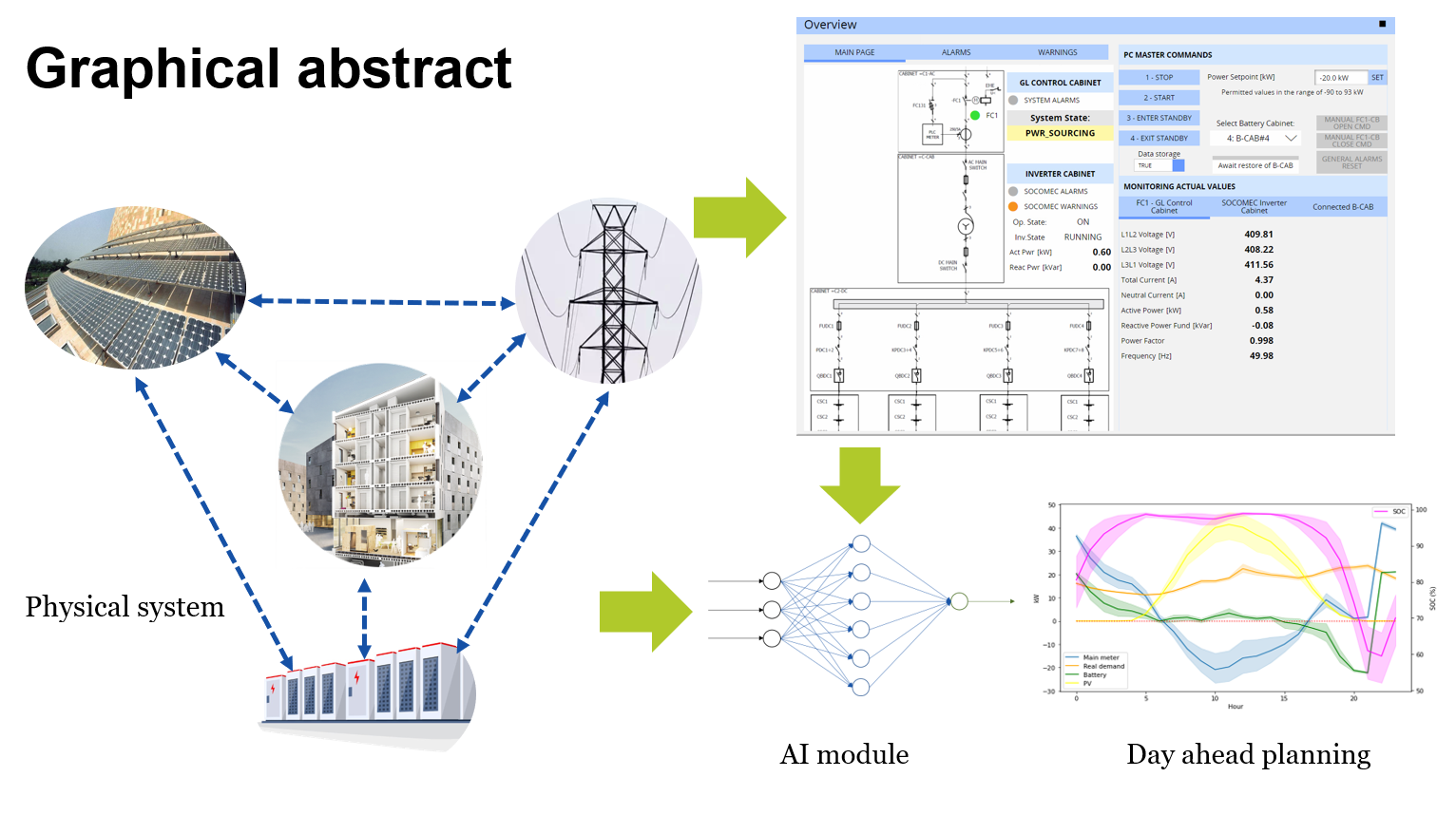
The aim on this project is to study the implementation and optimal operation of turnkey solutions involving solar PV coupled to energy storage systems (PV-ESS). For this, a two-fold approach where the impact of policy modifications is investigated by means of techno-economic scenario analyses while also demonstrating key PV-ESS innovations at KTH Live-In Labs.
Funded by:
Swedish Energy Agency under grant agreement N° 51752-1 (E2B2)
Time period:
January 2021 - September 2025
Project partners:



Aims and objectives
The overall goals are two-fold. First, to enhance access in the housing sector to solar electricity by identifying sustainable PV-ESS business models. Secondly, to develop and demonstrate two key PV-ESS related innovations that increase the flexibility and resiliency of solar PV systems towards an integrated operation in buildings. This will be realized by carrying out techno-economic scenario based analyses in parallel and complementary to a demonstration test-bed. The specific goals are:
- Identify business models for solar developers, prosumers, distributors and utilities that comply to grid-regulations, and sustain a profitable business when considering current and forecasted component costs, and minimizing exposure to removal of incentives or policy modifications.
- Development and verification in a relevant environment (i.e. KTH Live-in-Labs) of a new optimized PV-ESS turnkey solution for applications within the C&I market segment (multi-family residential, commercial and industrial buildings).
- Measurement and evaluation of the system to validate the control system and deliver data to evaluate the distribution of solar beyond the test-bed via machine learning, taking into account the intra-day and seasonal nature of solar energy, prices and demands.
- Specify, based on the test-bed installation experience, a generic “plug-and-play” architecture of the PV-ESS solution as turnkey for future implementation sites.
- The control system shall consider all feasible monetization strategies, and technology limitations to altogether increase the profitability of the installation when compared to using state-of-the-art deterministic PV-ESS control approaches. Simultaneously, the control system shall enable an increase of self-consumption of the existing PV in the test-bed facility.
Publications
Coming soon…
Project contact persons at KTH