
Solutions for a Resilient Planet - Turning Knowledge into Action
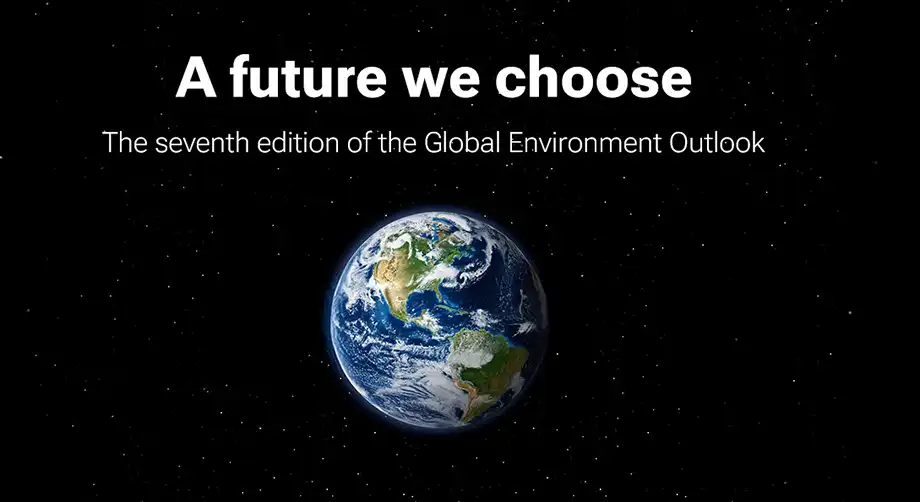
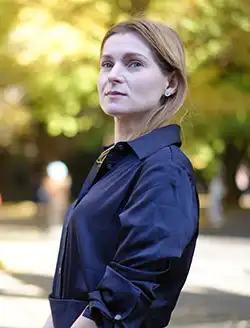
KTH researcher, Maryna Henrysson is one of the authors in The Global Environment Outlook: A future we choose (GEO-7) report. We met with Maryna to find out what are the key impacts of the report and what has she focused on in this enormous assessment.
What is GEO-7 and what makes it significant?
The report is the UN Environment Programme’s flagship assessment of the state of the planet. It looks at everything from the health of coral reefs and the ozone layer to climate risks, pollution, land degradation, biodiversity loss and their knock-on effects on economies and societies.
But GEO-7 is not just a catalogue of problems. It shows that if humanity acts quickly and decisively, we can still undo decades of environmental damage.
What do we need to do?
By transforming five key systems – economy and finance, materials and waste, energy, food and the environment – we could generate trillions in additional global GDP each year, avoid millions of deaths and lift hundreds of millions of people out of poverty and hunger.
What is the focus of your section?
I am the Lead Author on Chapter 7: “Implication of Environmental Crises on the Socioeconomic Dimensions of the Sustainable Development Goals”. The chapter looks at how the interlinked environmental crises are undermining the economic and social dimensions of the Sustainable Development Goals (SDGs).
How do your findings and recommendations contribute to the global environment?
Our contribution is to make it very clear that environmental breakdown is not a distant, purely “ecological” issue – it is already built into the everyday economics of hospitals, schools, infrastructure budgets, labour productivity, food prices and public finances.
By assembling evidence on the scale of health damage, infrastructure losses, productivity declines and the erosion of ecosystem value, the chapter provides a shared evidence base that environment ministries, finance and planning ministries, development agencies and civil society can all draw on.
In short, our chapter is about helping decision-makers see that protecting planetary health is the surest route to protecting human well-being – not a distraction from it.
What impact do you expect the new insights to have?
Of course, we cannot make policymakers and decision-makers adopt these recommendations or implement them line by line. What we can do is sharpen the case and make the choices harder to ignore.
Anything else you’d like to raise?
As an overarching message I would like everyone to know that there still is hope for ambitious climate and environmental action that delivers a healthier planet and better lives for all – but ONLY if we stop treating environmental sustainability as separate from economic and social policy, and start treating it as their foundation.
Text: Rita Nõu